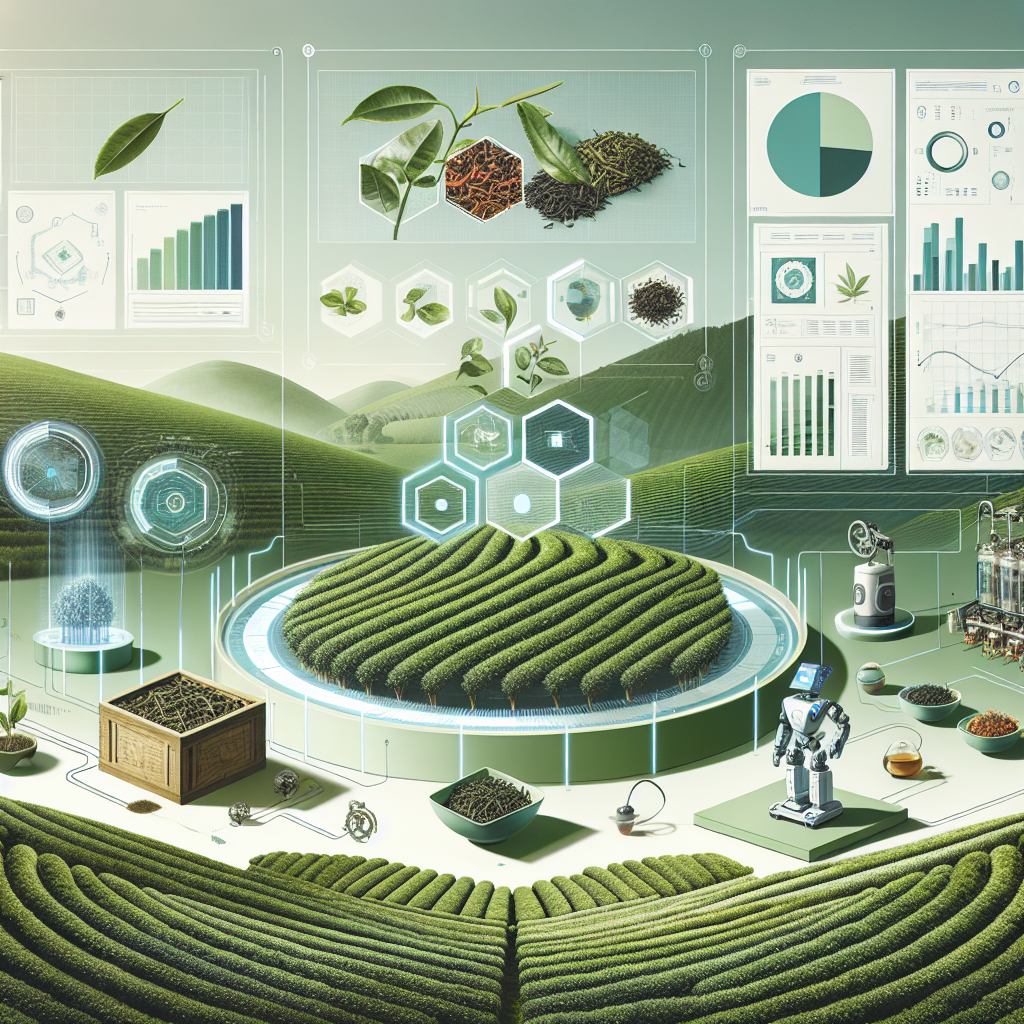
Tea, while symbolising cultural richness and social interactions around the world, is rapidly evolving towards the future alongside innovation and technology. In this article, we will explore the future of tea across a wide range of topics, from technological advancements in tea cultivation to the effects of digitalisation, from innovative tea products to sustainable production approaches. Additionally, insights into the health effects of tea and consumption trends related to modern ceremonies will also be included in this article.
Technological Developments in Tea Agriculture
Tea cultivation has held significant importance in many cultures throughout history. However, the changes observed in this field in recent years, alongside the development of technology, are noteworthy.Agricultural technologies not only enhance the quality of tea but also provide farmers with significant advantages by making production processes more efficient.
Especially, smart farming applications enable farmers to carry out processes such as soil analysis, irrigation, and fertilisation more effectively. For example, sensor technology is used to monitor soil moisture levels to determine irrigation needs. This not only conserves water but also supports the healthy growth of tea.
Additionally,drone technology is creating a revolutionary impact in tea agriculture. Drones allow for the rapid observation of large areas while providing quick data on plant health, saving farmers time. This offers a significant advantage in the early diagnosis and prevention of diseases.
Another important development in tea farming isdata analyticsapplications. Farmers can optimise their production processes by analysing the data they collect. This way, they can obtain information such as which types of tea grow better under which climate conditions and develop strategies accordingly.
As a result, technological advancements in tea agriculture benefit both producers and consumers. The opportunities provided by technology contribute to the adoption of a sustainable agricultural approach by enhancing the quality of tea. In the coming years, there is great anticipation regarding how these technological innovations will shape the tea industry.
Digitalisation and Tea Production
In recent years, the process of digiitalisation in tea production has gained momentum. This transformation is shaping the tea industry by offering innovative solutions at many stages, from production to consumption.Digital technologies provide tea producers with the opportunity to increase efficiency, reduce costs, and improve product quality.
In particular,IoT (Internet of Things) technology enables the real-time monitoring of data such as soil moisture, air temperature, and plant health through the use of sensors in tea fields. This allows producers to use their resources more efficiently by irrigating and fertilising at the right time.
Additionally,big data analysis is helping tea producers better understand consumer demands. Producers can analyse which types of tea are gaining more interest by tracking market trends, and with this information, they can expand their product ranges.
- Increased efficiency: Reduced labour costs with automatic irrigation and fertilisation systems.
- Quality control: Continuous monitoring of product quality with sensors.
- Analysis of Sunday demands: Decision-making processes based on consumer data.
Digitalisation also enables e-commerce platforms to allow tea producers to reach consumers directly. This reduces farmers' dependence on intermediaries, allowing them to achieve higher profit margins.
As a result, the process of digitalisation in the tea industry is transforming not only the production phase but also consumption habits. In the future, these innovative approaches are expected to play a significant role in enhancing sustainability and quality in tea production.
Innovative Tea Products: From Tradition to the Future
In recent years, the tea industry has undergone a significant transformation throughtechnological innovationsandinnovative applications, alongside traditional methods. Changes in consumer demands and the rise of health awareness have prompted tea producers to develop creative solutions. In this article, we will discuss the role of innovative products and technologies in the future of tea.
Smart Tea Brewing Systems
With the advancing technology, the tea brewing process has also evolved.Smart tea brewing machines allow users to brew their tea under the most ideal conditions. These machines automatically adjust factors such as water temperature and brewing time, providing a perfect tea experience every time.
Formulations That Enhance the Health Benefits of Teas
In addition to traditional tea varieties, with the increasing awareness of health, different herbal extracts and vitamins have also started to take their place in the market. For example, a blend of green tea and ginger strengthens the immune system, while a combination of lavender and white tea provides mental relaxation.
Tea Subscription Services
Offered for tea lovers to experience different flavours, tea subscription services allow users to discover new types of tea each month. These services not only send tea to consumers but also provide information about the tea's origin, health benefits, and brewing methods.
Sustainable Approaches to Tea Consumption
Tea producers are adopting organic farming methods while prioritising environmental sustainability and developing innovative solutions for waste management. This not only helps to conserve natural resources but also contributes to consumers' preference for healthy products.
Result
The tea industry is in a constant state of evolution, combining traditional and modern practices.Innovation and technology are becoming important tools in shaping the future role of tea while responding to consumer demands. As tea lovers explore new flavours in this world full of innovations, they will also have embraced healthy lifestyle habits.
New Approaches in Sustainable Tea Production
Today, tea production goes beyond just obtaining a delicious beverage, holding significant importance in terms of environmental sustainability and social responsibility. Innovation and technology in the tea sector play a critical role in supporting sustainable production processes. In this context, here are some important points about new approaches in tea production:
- Smart Agriculture Applications:With advancing technology, smart agriculture applications are being used to increase efficiency in tea production. Drones and sensors are employed to monitor plant health and manage water needs, ensuring that resources are used more effectively.
- Organic Farming:Organic tea production aims to minimise the use of chemical fertilisers and pesticides, thereby reducing harm to nature. This method not only offers an environmentally friendly approach but also meets consumers' demands for healthy products.
- Water Management: The conservation of water resources is crucial for ensuring sustainability in tea production. Techniques that promote water conservation, such as optimising irrigation systems and collecting rainwater, help to reduce water usage.
- Waste Management:Recycling the waste generated during tea production is a critical step to reduce environmental impacts. Turning the waste obtained from the production process into compost or using it for biogas production contributes to the understanding of a circular economy.
- Education and Social Responsibility: Investing in the education of tea producers plays an important role in achieving sustainability goals. Training programmes on sustainable agricultural practices for producers not only enhance production quality but also contribute to the economic development of local communities.
These new approaches not only make tea production more sustainable but also encourage consumers to turn towards eco-friendly products. Sustainable tea production carries the responsibility of leaving a healthy environment not just for today but for future generations as well. The tea industry aims to contribute to both nature and society with these innovative approaches.
Tea and Health: In the Light of Scientific Research
Tea has been presented to us for centuries as both an enjoyable beverage and a choice known for its health benefits. In recent years, scientific research has begun to examine the effects of tea on health in more detail. In particular, green tea, black tea, oolong tea, and white tea are increasingly attracting interest regarding their effects on the body.
Scientists have revealed that compounds in tea such asantioxidants,flavonoids, andpolyphenols have positive effects on cellular health. These compounds offer protective properties against diseases such as cancer,heart diseases, and diabetes.
- Boosting Metabolism: Tea can help with weight control by accelerating metabolism.
- Heart Health:Regular tea consumption may reduce the risk of heart diseases.
- Spiritual Peace:The L-theanine in tea helps to reduce stress levels, providing mental relaxation.
- Strengthening the Immune System: Polyphenols strengthen the immune system, providing protection against diseases.
Research on the effects of tea on health has particularly focused on green tea. The high amounts of antioxidants contained in green tea help to prevent cell damage, thereby slowing down the ageing process. Additionally, regular consumption of green tea has a positive effect on weight loss.
On the other hand,black teaalso has significant health benefits. Research has shown that black teasupports heart healthand may help toregulate blood sugar levels. Therefore, it can be said that tea consumption has become an integral part of today's healthy lifestyle.
As a result, the effects of tea on health are supported by scientific research, and new findings are emerging every day. Tea is not just a beverage; it is an important element that supports our health. In this context, gaining more information about the various types of tea and their health benefits will be beneficial for leading a healthy life.
The Modern Face of Tea Ceremonies
Traditional tea ceremonies have held an important place in the social structure of cultures throughout history. However, today, influenced by technology and innovation, these ceremonies are undergoing a modern transformation.The preparation and presentation of tea is no longer just an act of serving a beverage; it is also becoming an experience, a ritual, and a moment of sharing.
In modern tea ceremonies,theimpact of technology is undeniable. For example, tea brewing machines and smart devices allow for the control of the ideal brewing temperature and time. This offers tea lovers more consistent results and rich flavours.Such devices enhance the flavour of the tea, elevating the quality of the ceremony.
Additionally, social media platforms are another factor influencing tea ceremonies. People share their special moments on apps like Instagram and TikTok to showcase their tea. This is popularising tea drinking culture on a global scale. Tea lovers enrich their own practices by observing ceremonies from different cultures.Target audience engagement emphasises that tea is not just a beverage, but also a lifestyle.
- Choosing the right tea: It is important to use fresh and suitable types of tea to enhance quality.
- Suitable brewing equipment: Modern brewing machines should be used to best reveal the aroma and flavour of the tea.
- Social interaction: Tea ceremonies help to strengthen social bonds by bringing people together.
As a result, tea ceremonies are evolving through the combination of technology and social dynamics. While preserving traditional elements, ceremonies that keep pace with the speed of modern life are reshaping the cultural value and social significance of tea.This transformation ensures that tea becomes not just a beverage, but also an experience.
Trends in Tea Consumption and Future Predictions
In recent years, tea consumption has transcended being just a beverage, becoming an integral part of health, lifestyle, and social interactions. Tea is shaped not only by its place in different cultures but also by technological innovations. So, what does the future hold for tea consumption?
- Healthy Alternatives:Tea, especially in line with healthy living trends, is highlighted by natural and organic options. Consumers are increasingly opting for natural teas that do not contain additives.
- Tea and Technology: Smart brewing devices and applications are enriching the experiences of tea lovers by providing the ideal brewing conditions.
- Tea and Sustainability:Sustainable farming practices are becoming increasingly important in tea production with the rise of environmental awareness. Consumers are choosing brands that contribute to ecological balance.
Among future predictions,personalised tea experiencesstand out. Consumers will have more options to create tea blends that suit their taste preferences. Additionally, the increase in research on the health benefits of tea will ensure that tea secures an important place in diets.
In addition to these,tea ceremoniesand social interactions will continue to enhance the cultural significance of tea. To cope with the stress of modern life, many people will turn to tea as a tool for meditation. This will allow tea to become not just a beverage, but also a symbol of lifestyle.
As a result, the future of tea will be shaped in a dynamic structure that brings together both traditional and modern elements. The evolution of consumption habits will support innovative approaches and technological developments while preserving the rich cultural heritage of tea.